1. Material Qualities and Structural Stability
1.1 Innate Attributes of Silicon Carbide
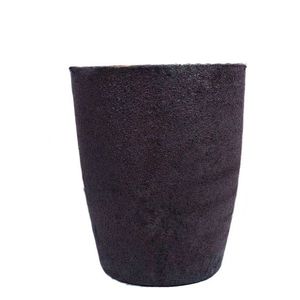
(Silicon Carbide Crucibles)
Silicon carbide (SiC) is a covalent ceramic compound made up of silicon and carbon atoms arranged in a tetrahedral latticework structure, mainly existing in over 250 polytypic types, with 6H, 4H, and 3C being one of the most technologically appropriate.
Its solid directional bonding conveys exceptional hardness (Mohs ~ 9.5), high thermal conductivity (80– 120 W/(m · K )for pure solitary crystals), and impressive chemical inertness, making it one of one of the most durable materials for severe settings.
The vast bandgap (2.9– 3.3 eV) makes sure exceptional electric insulation at area temperature and high resistance to radiation damage, while its low thermal development coefficient (~ 4.0 × 10 ⁻⁶/ K) contributes to superior thermal shock resistance.
These intrinsic homes are preserved even at temperature levels exceeding 1600 ° C, enabling SiC to preserve architectural honesty under long term direct exposure to thaw steels, slags, and reactive gases.
Unlike oxide porcelains such as alumina, SiC does not respond easily with carbon or type low-melting eutectics in minimizing ambiences, a vital advantage in metallurgical and semiconductor processing.
When produced into crucibles– vessels designed to include and warm materials– SiC outperforms conventional products like quartz, graphite, and alumina in both lifespan and process dependability.
1.2 Microstructure and Mechanical Stability
The performance of SiC crucibles is closely linked to their microstructure, which relies on the manufacturing approach and sintering additives utilized.
Refractory-grade crucibles are usually created by means of response bonding, where porous carbon preforms are penetrated with molten silicon, developing β-SiC with the reaction Si(l) + C(s) → SiC(s).
This procedure yields a composite framework of key SiC with residual complimentary silicon (5– 10%), which improves thermal conductivity yet might restrict use above 1414 ° C(the melting point of silicon).
Conversely, totally sintered SiC crucibles are made through solid-state or liquid-phase sintering making use of boron and carbon or alumina-yttria additives, attaining near-theoretical density and greater purity.
These exhibit premium creep resistance and oxidation stability but are extra expensive and challenging to fabricate in large sizes.
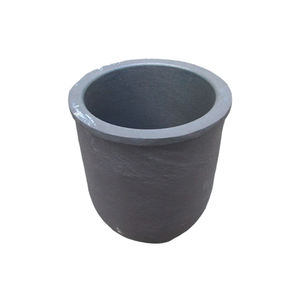
( Silicon Carbide Crucibles)
The fine-grained, interlacing microstructure of sintered SiC gives exceptional resistance to thermal fatigue and mechanical erosion, critical when dealing with molten silicon, germanium, or III-V substances in crystal growth processes.
Grain border design, consisting of the control of additional stages and porosity, plays an important role in establishing long-term longevity under cyclic home heating and aggressive chemical settings.
2. Thermal Performance and Environmental Resistance
2.1 Thermal Conductivity and Heat Distribution
One of the defining benefits of SiC crucibles is their high thermal conductivity, which allows fast and consistent heat transfer throughout high-temperature handling.
In contrast to low-conductivity products like fused silica (1– 2 W/(m · K)), SiC efficiently distributes thermal power throughout the crucible wall, lessening localized hot spots and thermal gradients.
This uniformity is vital in procedures such as directional solidification of multicrystalline silicon for photovoltaics, where temperature level homogeneity straight influences crystal quality and problem density.
The mix of high conductivity and reduced thermal development leads to a remarkably high thermal shock parameter (R = k(1 − ν)α/ σ), making SiC crucibles immune to cracking during rapid home heating or cooling down cycles.
This enables faster furnace ramp prices, boosted throughput, and minimized downtime because of crucible failing.
Furthermore, the material’s capacity to stand up to duplicated thermal cycling without significant destruction makes it ideal for set processing in industrial heaters running over 1500 ° C.
2.2 Oxidation and Chemical Compatibility
At raised temperature levels in air, SiC undergoes passive oxidation, forming a protective layer of amorphous silica (SiO ₂) on its surface area: SiC + 3/2 O TWO → SiO TWO + CO.
This glazed layer densifies at high temperatures, working as a diffusion obstacle that slows more oxidation and maintains the underlying ceramic framework.
Nevertheless, in lowering ambiences or vacuum cleaner problems– usual in semiconductor and steel refining– oxidation is subdued, and SiC stays chemically secure versus molten silicon, light weight aluminum, and numerous slags.
It resists dissolution and reaction with molten silicon up to 1410 ° C, although long term exposure can result in slight carbon pick-up or interface roughening.
Crucially, SiC does not introduce metallic pollutants into delicate thaws, a vital requirement for electronic-grade silicon manufacturing where contamination by Fe, Cu, or Cr needs to be kept listed below ppb degrees.
However, treatment should be taken when refining alkaline planet metals or highly responsive oxides, as some can rust SiC at severe temperatures.
3. Manufacturing Processes and Quality Control
3.1 Fabrication Methods and Dimensional Control
The manufacturing of SiC crucibles includes shaping, drying, and high-temperature sintering or seepage, with techniques selected based upon called for purity, size, and application.
Typical developing strategies include isostatic pressing, extrusion, and slide spreading, each supplying different levels of dimensional precision and microstructural uniformity.
For big crucibles utilized in solar ingot casting, isostatic pressing guarantees regular wall surface density and thickness, minimizing the threat of crooked thermal development and failure.
Reaction-bonded SiC (RBSC) crucibles are economical and commonly utilized in foundries and solar sectors, though recurring silicon restrictions optimal solution temperature.
Sintered SiC (SSiC) variations, while extra expensive, deal premium pureness, toughness, and resistance to chemical strike, making them suitable for high-value applications like GaAs or InP crystal growth.
Precision machining after sintering may be needed to accomplish limited tolerances, particularly for crucibles made use of in upright gradient freeze (VGF) or Czochralski (CZ) systems.
Surface completing is important to minimize nucleation sites for defects and guarantee smooth thaw flow during casting.
3.2 Quality Assurance and Efficiency Validation
Strenuous quality control is important to make certain integrity and long life of SiC crucibles under demanding operational problems.
Non-destructive evaluation methods such as ultrasonic screening and X-ray tomography are used to identify inner fractures, voids, or thickness variants.
Chemical analysis through XRF or ICP-MS validates low degrees of metal impurities, while thermal conductivity and flexural stamina are determined to confirm material uniformity.
Crucibles are commonly subjected to simulated thermal biking tests prior to delivery to identify prospective failing modes.
Set traceability and qualification are conventional in semiconductor and aerospace supply chains, where component failing can bring about costly production losses.
4. Applications and Technical Influence
4.1 Semiconductor and Photovoltaic Industries
Silicon carbide crucibles play a pivotal role in the manufacturing of high-purity silicon for both microelectronics and solar cells.
In directional solidification heating systems for multicrystalline solar ingots, large SiC crucibles serve as the primary container for molten silicon, sustaining temperature levels over 1500 ° C for numerous cycles.
Their chemical inertness protects against contamination, while their thermal security makes certain uniform solidification fronts, bring about higher-quality wafers with less misplacements and grain limits.
Some makers layer the inner surface area with silicon nitride or silica to further decrease bond and facilitate ingot release after cooling.
In research-scale Czochralski development of substance semiconductors, smaller SiC crucibles are used to hold thaws of GaAs, InSb, or CdTe, where marginal reactivity and dimensional security are extremely important.
4.2 Metallurgy, Factory, and Arising Technologies
Beyond semiconductors, SiC crucibles are vital in steel refining, alloy preparation, and laboratory-scale melting procedures entailing light weight aluminum, copper, and precious metals.
Their resistance to thermal shock and erosion makes them suitable for induction and resistance heating systems in factories, where they last longer than graphite and alumina alternatives by several cycles.
In additive production of responsive metals, SiC containers are used in vacuum cleaner induction melting to avoid crucible break down and contamination.
Arising applications include molten salt reactors and concentrated solar energy systems, where SiC vessels might have high-temperature salts or fluid metals for thermal energy storage.
With ongoing advancements in sintering technology and coating design, SiC crucibles are positioned to support next-generation materials handling, making it possible for cleaner, much more reliable, and scalable industrial thermal systems.
In recap, silicon carbide crucibles stand for an important making it possible for technology in high-temperature product synthesis, integrating phenomenal thermal, mechanical, and chemical performance in a solitary crafted part.
Their extensive adoption across semiconductor, solar, and metallurgical sectors emphasizes their function as a keystone of contemporary commercial ceramics.
5. Vendor
Advanced Ceramics founded on October 17, 2012, is a high-tech enterprise committed to the research and development, production, processing, sales and technical services of ceramic relative materials and products. Our products includes but not limited to Boron Carbide Ceramic Products, Boron Nitride Ceramic Products, Silicon Carbide Ceramic Products, Silicon Nitride Ceramic Products, Zirconium Dioxide Ceramic Products, etc. If you are interested, please feel free to contact us.
Tags: Silicon Carbide Crucibles, Silicon Carbide Ceramic, Silicon Carbide Ceramic Crucibles
All articles and pictures are from the Internet. If there are any copyright issues, please contact us in time to delete.
Inquiry us